
Game area

Honeycomb Bridge
The game loads right here — no download needed.
In every Selminha game: P to pause · M to toggle sound · SPACE or tap to startAbout Honeycomb Bridge
This is the classic honeycomb connection game, played on a diamond of wax cells, all made of clay in Backyard Town: the gold bees and the lilac bees land one at a time, and the first team to connect its two sides with a chain of touching cells wins. Each team has two sides marked with flowers: the gold bees connect the sunflowers and the lilac bees connect the bluebells. There are no ties (when the honeycomb fills up, one of the teams has always connected its sides), and the winning path lights up as a glowing honey thread. The honeycomb comes in three sizes: small (7 × 7, for quick games), medium (9 × 9) and large (11 × 11, the tournament size). The swap works only on the large honeycomb: the player who goes second can, instead of landing a bee, take the first player's bee, which changes color and flies to the mirror spot. On the small and medium honeycombs there is no swap, and a different team goes first every game. Against the gang, you pick your opponent: Scribble, the crayon puppy, builds on his own cells and hardly ever blocks your path (easy, and in his games the danger cells blink); Nino, the gang's board-game whiz, sees the shortest path but sometimes gets distracted (medium); and Granny Quelonia, who carried the world's games on her shell, thinks through thousands of moves before every bee (hard). On a phone, playing takes two taps: the first aims (a pale bee hovers over the cell, and you can drag your finger) and the second lands it. When the cells get tiny, a magnifier bubble pops up above your finger with the aim zoomed in: just tap it and the bee lands. Against the gang you earn points: each win is worth more the tougher the opponent, the bigger the honeycomb and the fewer bees you use, and your best total can make the TOP 5. You can also play a friend on one device (Granny Quelonia watches and cheers) or by link: the game creates an invite, whoever opens it picks their character from the ones left, enters a name and plays the lilac bees. A game by link is saved on the site, so you don't both need to be online: each of you moves whenever you can, and the game tells you when the other player has moved. When a game ends, you both decide whether to play again in the same room, with no limit on rematches, and anyone who opens the link to a full room can watch.
In Selminha's words
“Honeycomb Bridge fits in one sentence and lasts a lifetime: connect your two sides, and there are no ties. I wanted to bring it to Challenge Square, in clay, with bees, sunflowers and bluebells, the gang across the table and a link to invite anyone you like, no sign-up and no app.”
How to play Honeycomb Bridge and tips to connect both sides
- Tap or click an open cell to land your bee. On a phone you play in two taps: the first aims (a pale bee appears and you can drag your finger to the right cell) and the second, on the same cell, lands the bee. When the cells get tiny, a magnifier appears above your finger: tap it to land the bee. On a computer you can also use the arrow keys or WASD and J or Enter; on a gamepad, the d-pad and A or X.
- Connect your two sides of the honeycomb with a chain of touching cells: the gold bees connect the sunflowers and the lilac bees connect the bluebells. One bee at a time, and there are no ties.
- VS. THE COMPUTER: pick the honeycomb size (small, medium or large) and your opponent, 1 Scribble (easy), 2 Nino (medium) or 3 Granny Quelonia (hard). You play the gold bees; a different team goes first every game. After each game, PLAY AGAIN keeps your streak going and STOP shows your points.
- THE SWAP, on the large honeycomb only (11 × 11): the player who goes second can take the first player's bee, which changes color and flies to the mirror spot, or just play their own move. The small and medium honeycombs have no swap.
- TWO PLAYERS, ONE DEVICE: one plays the gold bees, the other the lilac bees, one bee at a time. Granny Quelonia watches and cheers.
- PLAY BY LINK: pick your character, enter your name, then copy the link and send it. Whoever opens the link picks one of the characters left, enters a name and joins with the lilac bees. The game is saved: close it and come back anytime through the same link; if the other player hasn't moved in over 2 days and it's their turn, you can end the game as the winner.
- Tip: land a bee in the middle of the other team's path before they connect their sides, and use your own bees as stepping stones to connect faster. The center of the honeycomb is a good place to start.
Animated walkthrough
Learn to play Honeycomb Bridge in 8 steps
An animated scene for each rule. It's the same walkthrough that opens from the “?” button in the game.
The rules
- Connect both sides
- The first team to connect its two sides of the honeycomb with a chain of touching cells wins: the gold bees connect the sunflowers and the lilac bees connect the bluebells.
- One bee at a time
- Each team lands one bee at a time, on any open cell. Once landed, a bee never moves.
- Never a tie
- When the honeycomb fills up, one of the teams has always connected its sides. The winning path lights up as a glowing honey thread.
- Who goes first
- Changes every game: the gold bees start one, the lilac bees the next.
The three opponents
- Scribble (easy)
- The crayon puppy builds on his own cells and hardly ever blocks your path. In his games, the danger cells blink.
- Nino (medium)
- Keeps an eye on the shortest path, but sometimes gets distracted.
- Granny Quelonia (hard)
- Thinks through thousands of moves before every bee. The only way to beat her is to block her path early and connect your sides without leaving a gap.
The levels were measured over simulated games: each opponent beats the one before it in 90 to 100 games out of 100.
The three honeycomb sizes
- Small (7 × 7)
- The quick one, great for starting out. No swap: a different team goes first every game.
- Medium (9 × 9)
- A little more room to think. No swap either: a different team goes first every game.
- Large (11 × 11)
- The tournament size, with the swap.
- The swap (large honeycomb only)
- The player who goes second can, instead of landing a bee, take the first player's bee: it changes color and flies to the mirror spot. Or they just play their own move.
Controls on phone and computer
- Computer
- Tap or click an open cell (on a phone, two taps: aim and land; if the magnifier appears, tap it to land) · arrow keys or WASD move the cursor, J or Enter lands the bee · 1, 2 and 3 pick the opponent and the honeycomb size · P or Esc pauses · M sound · F full screen · compatible gamepad: d-pad moves the cursor, A or X lands the bee, Start pauses, Back toggles sound.
- Touch
- Phone held upright, in full screen; on a tablet, the game adapts to the way you hold it. The cells are small, so playing takes two taps: the first aims (a pale bee appears and you can drag your finger), the second lands it. On a phone, when the cells get tiny, a magnifier appears above your finger: tap it to land the bee. Invite with the COPY button: paste the link anywhere (a text, a chat app…).
On a phone
- Two taps
- The first tap aims (a pale bee appears over the cell and you can drag your finger) and the second, on the same spot, lands the bee.
- The magnifier
- On a phone, when the cells get tiny, a magnifier appears above your finger with the aim zoomed in, and one tap on it lands the bee.
Points and high scores
- Points
- Only against the computer. On the small honeycomb, each win is worth 100 points against Scribble, 300 against Nino and 1,000 against Granny Quelonia; on the medium it is worth 1.5 times that and on the large, double. You also get a bonus for every bee you used under the honeycomb limit (18, 26 or 36): 10 points per bee against Scribble, 20 against Nino and 30 against Granny Quelonia. There are no ties.
- TOP 5
- When you stop, your running total can make the site's TOP 5. There are no points on the same device or by link.
Playing with someone
- Two players, one device
- One plays the gold bees, the other the lilac bees. Granny Quelonia watches and cheers.
- Invite
- One link per room. Whoever opens it picks a character (yours stays reserved), enters a name and plays the lilac bees. The room is saved on the site and each of you moves whenever you can.
- Rematch
- When a game ends, you both decide whether to play again in the same room, as many times as you like, and the team that goes first changes.
- Watching
- Anyone who opens the link to a full room can watch, up to 50 people per game.
- Away players
- If the other player hasn't moved in over 2 days and it's their turn, you can end the game as the winner. A room with no moves for 7 days closes automatically.
Tell us what happened, or what you'd change. Your message goes straight to Selminha, and you'll get a reply by email.
More board and logic games
Your next discovery could be right here.

Dots and Boxes
Clay Dots and Boxes in Backyard Town: the classic pencil-and-paper game of connecting dots. Close more boxes than Scribble (easy), Nino (medium) or Granny Quelonia (hard), play someone on the same device, or send a link so each of you can play from your own device.
Play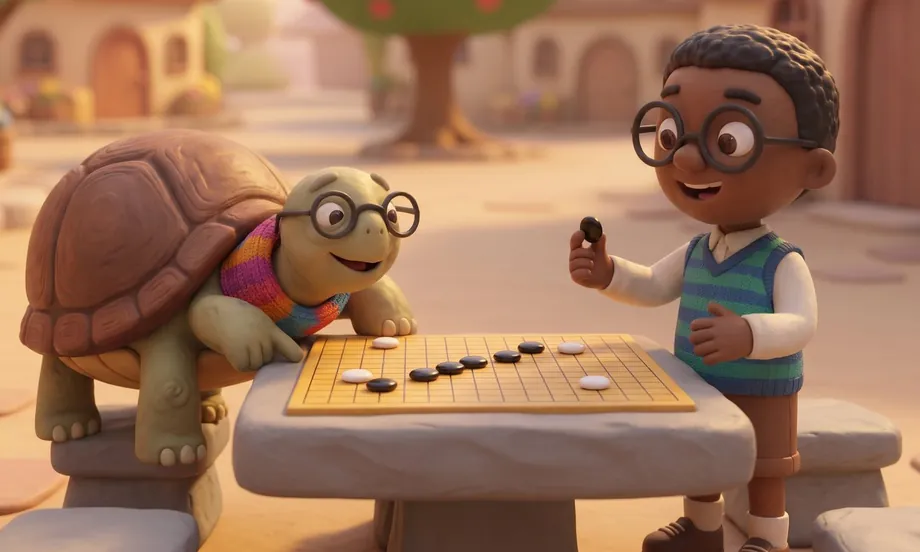
Gomoku: Five in a Row
Backyard Town's gomoku, made entirely of clay: the first to get five stones in a row wins. Take on Scribble (easy), Nino (medium) or Granny Quelonia (hard). Want to play a friend? Share one device or send a link and play on your own devices.
Play