
Game area
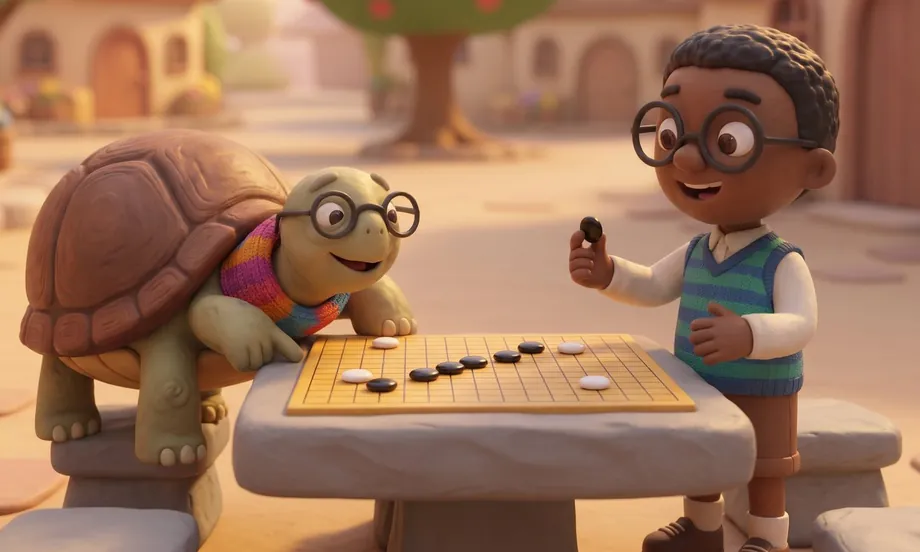
Gomoku: Five in a Row
The game loads right here — no download needed.
In every Selminha game: P to pause · M to toggle sound · SPACE or tap to startAbout Gomoku: Five in a Row
It's the gomoku you know, on a board of 15 × 15 lines: black and white stones go on the spots where the lines cross, one at a time, and the first to get five stones in a row — across, down or diagonally — wins. Six or more count too, and a full board with no five in a row is a tie (a rare one). Everything is made of clay: the board, which looks like wood, sits on a stone table in Challenge Square, and every stone squishes a little as it lands on its spot. Across the table sits someone from the Backyard Town gang, animated like a stop-motion clay movie: they wait, think over their move, cheer when they win and pout when they lose. Against the gang, you pick your opponent: Scribble, the crayon puppy, plays near the stones and sometimes gets distracted (easy — and he even calls out "Watch out!" when he gets four in a row); Nino, the gang's board game whiz, blocks your rows of 4 but sometimes lets a row of 3 with open ends slip by (medium); and Granny Quelonia, who carries the world's games on her shell, thinks several moves ahead and lets nothing get past her (hard). Since the spots are small, playing on a phone takes two taps: the first one aims (a big stone appears, and you can drag your finger to the right spot) and the second one places it. Players take turns going first, and your running score (wins, ties and losses) stays on your opponent's card until you stop. Wins against the gang earn points: a win is worth more the tougher your opponent is and the fewer stones you use, and your best total can make the TOP 5. You can also play with someone on the same device (Granny Quelonia watches and cheers) or by link: the game makes an invite, and whoever opens it picks a character from the ones left, enters a name and plays with the white stones. A game by link is saved on the site, so you don't both need to be online: each of you moves whenever you can, and the game lets you know when the other player has moved. When it's over, you both decide whether to play again in the same room, with no limit on rematches, and anyone who opens the link to a full room can watch.
In Selminha's words
“Gomoku is tic-tac-toe's big brother: the same idea of making a line, but on a real board, with 225 spots for your stones and games that can swing from one move to the next. I wanted to bring it to Challenge Square, in clay, with the gang across the table and a link to invite anyone you like, no sign-up and no app.”
How to play Gomoku and tips to get five in a row
- Tap or click an empty spot to place your stone. On a phone you play in two taps: the first aims (a big stone appears, and you can drag your finger to the right spot) and the second, on the same spot, places the stone. On a computer you can also use the arrow keys or WASD and J or Enter; on a gamepad, the d-pad and A or X.
- VS. THE COMPUTER: pick your opponent — 1 Scribble (easy), 2 Nino (medium) or 3 Granny Quelonia (hard). You play the black stones; players take turns going first. After each game, PLAY AGAIN keeps your streak going and STOP shows your points.
- TWO PLAYERS, ONE DEVICE: one plays the black stones, the other the white stones, one stone at a time. Granny Quelonia watches and cheers.
- PLAY BY LINK: pick your character, enter your name, then copy the link and send it. Whoever opens the link picks one of the characters left, enters a name and joins with the white stones.
- A game by link is saved: close it and come back anytime through the same link. The game tells you when the other player joined or moved; if they haven't moved in over 2 days and it's their move, you can end the game as the winner.
- Tip: a row of 3 with both ends open is dangerous, so block one end. And make two of them at once: your opponent can only block one.
Animated walkthrough
Learn to play Gomoku in 6 steps
An animated scene for each rule. It's the same walkthrough that opens from the “?” button in the game.
The rules
- Five in a row
- The first player to get five stones in a row — across, down or diagonally — wins. Six or more count too.
- The board
- 15 × 15 lines: stones go on the spots where the lines cross and, once placed, they never move.
- Tie
- A full board and nobody got five in a row: it's a tie (a rare one).
- Who goes first
- Switches every game: you go first in one (with the black stones), your opponent in the next.
The three opponents
- Scribble (easy)
- The crayon puppy plays near the stones and sometimes gets distracted. The "Watch out!" warning only shows up in his games: when he gets four in a row, the row flashes and the spot that blocks it lights up.
- Nino (medium)
- Blocks your rows of 4 and keeps track of his own, but sometimes lets a row of 3 with both ends open slip by.
- Granny Quelonia (hard)
- Thinks several moves ahead and lets nothing get past her. The only way to beat her is to create two threats at once.
The levels were measured over hundreds of simulated games: against a careful player, Scribble loses 98 out of 100, Nino loses 65 out of 100 and Granny Quelonia loses none; only a strong player who looks three moves ahead can beat her, and even then not always.
Controls on phone and computer
- Computer
- Tap or click an empty spot (on a phone, two taps: aim and place) · arrow keys or WASD move the cursor, J or Enter places your stone · 1, 2 and 3 pick your opponent · P or Esc pauses · M sound · F full screen · compatible gamepad: d-pad moves the cursor, A or X places your stone, Start pauses, Back toggles sound.
- Touch
- Phone held upright, in full screen; on a tablet, the game adapts to the way you hold it. The spots are small, so playing takes two taps: the first aims (a big stone appears and you can drag your finger), the second places it. Invite with the COPY button: paste the link anywhere (a text, a chat app…).
Points and high scores
- Points
- Only against the computer. Each win is worth 100 points against Scribble, 300 against Nino and 1,000 against Granny Quelonia, plus a bonus for every stone you didn't use out of 25 (10 points per stone against Scribble, 20 against Nino and 30 against Granny Quelonia). A tie is worth 50, 100 or 150 points, depending on the opponent.
- TOP 5
- When you stop, your running total can make the site's TOP 5. There are no points on the same device or by link.
Playing with someone
- Two players, one device
- One plays the black stones, the other the white stones. Granny Quelonia watches and cheers.
- Invite
- One link per room. Whoever opens it picks a character (yours stays reserved), enters a name and plays with the white stones. The room is saved on the site and each of you moves whenever you can.
- Rematch
- When a game ends, you both decide whether to play again in the same room, as many times as you like, and players take turns going first.
- Watching
- Anyone who opens the link to a full room can watch, up to 50 people per game.
- Away players
- If the other player hasn't moved in over 2 days and it's their move, you can end the game as the winner. A room with no moves for 7 days closes automatically.
Tell us what happened, or what you'd change. Your message goes straight to Selminha, and you'll get a reply by email.
More board and logic games
Your next discovery could be right here.

Dominoes at the Square
Clay dominoes from Backyard Town. Play with two, three or four players against Scribble (easy), Nino (medium) and Granny Quelonia (hard) — four at the table play as teams — or send a link and play with friends, each on their own device.
Play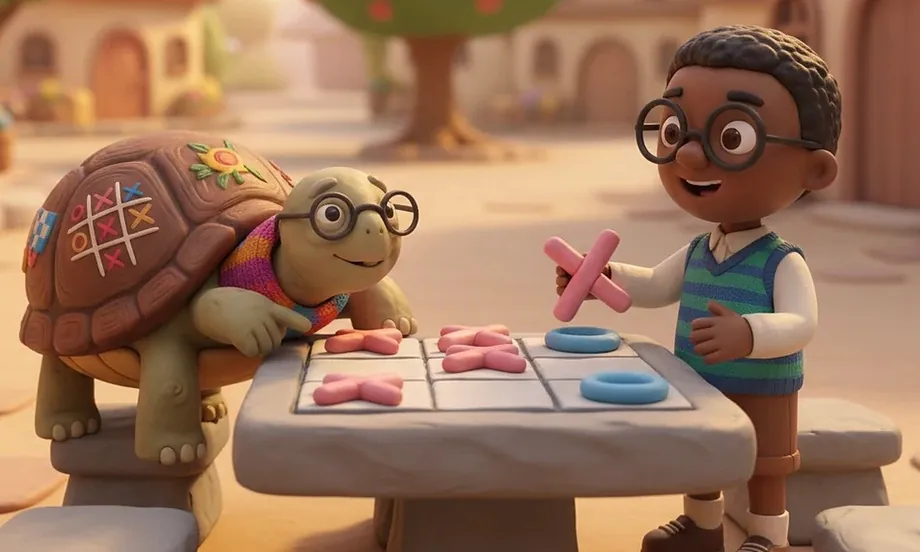
Tic-Tac-Toe
Backyard Town's tic-tac-toe, made entirely of clay. Take on Scribble (easy), Nino (medium) or Granny Quelonia (hard — she never loses), or send someone a link and play on your own devices, whenever you can.
Play