
Game area
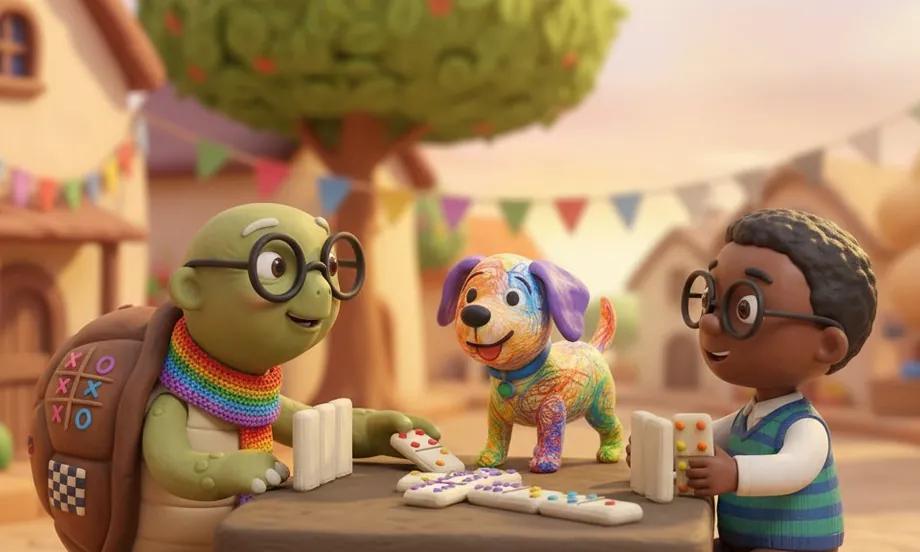
Dominoes at the Square
The game loads right here, no download.
In every Selminha game: P pauses · M sound · SPACE or tap to startAbout Dominoes at the Square
It's the classic double-six set — all 28 tiles, from double blank to double six — made entirely of clay: the tiles have colorful pips (or black ones, if you prefer), and the table is a stone slab at Challenge Square that grows in whatever direction the line of tiles needs, so the tiles never shrink. Two, three or four can play; with four, you play as teams, with your partner sitting across from you. Everyone gets 7 tiles and the rest go to the boneyard (with four players, there's no boneyard). On your turn, match a tile to one of the two open ends; if nothing fits, draw from the boneyard until something does, and if the boneyard is empty, pass. Whoever plays their last tile goes out and scores the pips left in the opponents' hands. If the game is blocked, the player with the fewest pips in hand wins — with four, the team with fewer — and scores the opponents' pips. On a team, your partner's pips never count. You play to the target you choose, 50 or 100 points. Across the table sits the Backyard Town gang, animated like a claymation movie: Scribble, the chalk puppy, just plays whatever fits (easy); Nino gets rid of the heavy tiles and the doubles first (medium); and Granny Quelonia keeps track of what everyone is missing, holds on to numbers so she never runs dry and, on a team, never blocks her partner (hard). To play with friends, set up a table for two, three or four and send the link: everyone plays on their own device, the game is saved on the site and each player takes their turn whenever they can. There's a text chat at the table, and anyone who opens the link of a full table can watch. There's no leaderboard: the first to reach the target wins.
In Selminha's words
“Dominoes is the game of park tables everywhere: friends gathered around, tiles slapping the table and someone counting points out loud. I wanted to bring that circle to Backyard Town, with clay tiles and a link to invite anyone you like — no sign-up, no app.”
How to play Dominoes at the Square and tips to go out first
- On your turn, the tiles that fit light up. Tap or click one, then tap the spot that lights up on the table (or tap the tile again); you can also drag the tile onto the table. On a computer, ← → or A D pick a tile and Enter plays it; on a controller, use the D-pad and A.
- Against the gang: pick two, three or four at the table, who plays against you (with four, who your partner is), a target of 50 or 100 points, and colorful or black pips.
- With friends: tap WITH FRIENDS, pick two, three or four at the table and the target, type your name and send the link. Whoever opens it types a name and takes a seat; once everyone's there, the host taps START THE MATCH — with four, after choosing a partner.
- A game with friends is saved: close it and come back through the same link whenever you like. You'll get a heads-up when someone joins or plays. Leaving in the middle of a game counts as resigning, and the game asks you first; if it's someone's turn and they haven't played in over 2 days, the game can be ended for inactivity.
- Tip: get rid of your heavy tiles and doubles early, and watch for the numbers the others don't have — a player who drew or passed with that number on an open end doesn't have it. On a team, don't block your partner.
The rules
- Matching
- On your turn, play a tile with the same number as one of the two open ends.
- Drawing and passing
- If nothing fits, draw from the boneyard until something does; if the boneyard is empty, pass. A table of four has no boneyard.
- Going out
- Whoever plays their last tile goes out and scores the total pips left in the opponents' hands.
- Blocked game
- No one can play: the player with the fewest pips in hand wins (with four, the team with fewer) and scores the opponents' pips. If the totals tie, no team scores; playing solo, the one holding the lowest tile wins.
- Who leads
- In the first round, the double six leads (or the highest double if no one has it). After that, the lead passes to the next player, who can open with any tile. Anyone dealt 4 or more doubles gets a reshuffle.
- Target
- The game ends when someone (or a team) reaches 50 or 100 points — your choice.
The three opponents
- Scribble (easy)
- The chalk puppy just plays: any tile that fits, and sometimes the lightest one, getting stuck with the heavy tiles.
- Nino (medium)
- Dumps the heavy tiles and the doubles first, but every now and then gets distracted and plays anything.
- Granny Quelonia (hard)
- Dumps the heavy tiles too, but also holds on to numbers so she never runs dry, leaves open ends the others can't match and avoids setting up the next player. On a team, she never blocks her partner.
Controls on phone and computer
- Computer
- Tap or click a lit tile, then the spot that lights up (or drag the tile onto the table) · ← → or A D pick a tile · Enter or ↑ play it · ← → choose the end when the tile fits both · P or Esc pause · M sound · F full screen · supported controllers: D-pad picks, A plays, Start pauses, Back toggles sound.
- Touch
- Phone held upright, in full screen; on a tablet, the game follows the way you're holding it; on a computer, it's landscape. Tap a lit tile and then the spot that lights up, or drag the tile onto the table; drag the table to see the rest of the line. Invite friends with the COPY LINK button and paste the link anywhere (a text, a chat app…).
With friends
- Invite
- One link per table, for two, three or four players. Whoever opens it types a name and takes a seat; the table is saved on the site and each player takes their turn whenever they can.
- Teams
- At a table of four, the host picks a partner, who sits across the table.
- Chat
- Text messages and reactions for everyone seated at the table.
- Watching
- Anyone who opens the link of a full table can watch, up to 50 people per table.
- Rematch
- When the game ends, everyone decides whether to play again at the same table.
- Resigning and inactivity
- Resigning or leaving in the middle of a game hands the win to the opponents, and the game asks first. If it's someone's turn and they haven't played in over 2 days, the game can be ended for inactivity; a table with no moves for 7 days ends with no winner.
Tell us what happened, or what you would change. The message goes straight to Selminha, and you'll get a reply by email.
More board and table games
Your next discovery could be right here.
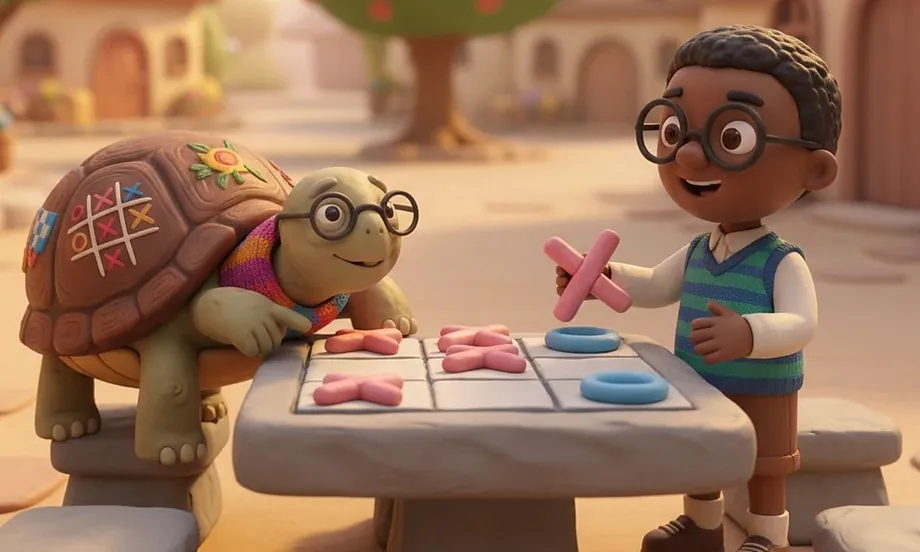
Tic-Tac-Toe
Backyard Town's tic-tac-toe, made entirely of clay. Take on Scribble (easy), Nino (medium) or Granny Quelonia (hard — she never loses), or send someone a link and play on your own devices, whenever you can.
Play
Backgammon
Scrapyard backgammon in Dália’s workshop: brass drum lids against tires on a steel-plate board, with dice welded from junk. Take on the four villains, from the Tamer (very easy) to the Executive (hard), or send someone a link and play whenever you can, each on your own device. Standard backgammon: 15 checkers a side, the bar, home board, bearing off, doubles and the must-use-both-dice rule. First to bear off all 15 wins.
Play