
Game area
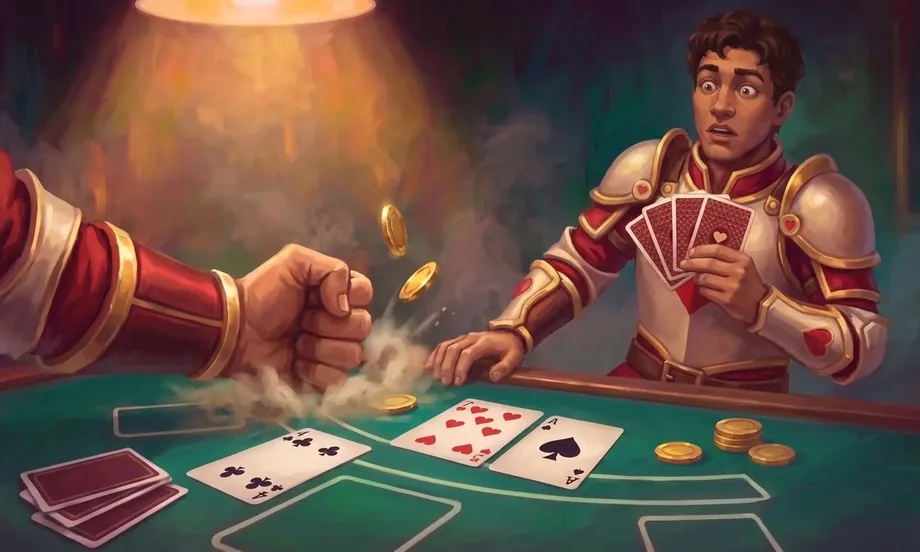
Truco
The game loads right here — no download needed.
In every Selminha game: P to pause · M to toggle sound · SPACE or tap to startAbout Truco
Four players in two teams, partners facing each other, a 40-card deck (no 8s, 9s or 10s) and three cards each. Win two of the three rounds and the hand is yours. You never have to follow suit, and the strongest card takes the round. On your turn, before you play, you can call truco to raise the stakes: the other team accepts, folds (and the caller scores what the hand was worth) or raises again. In Paulista and Mineiro, from the second round on, you can play a card face down. Whoever opens the table picks the style. In Paulista, a card turned up from the deck sets the top cards for each hand; hands are worth 1 and truco 3, then six, nine and twelve. In Mineiro the top cards are fixed: the 4 of clubs (the zap), 7 of hearts, ace of spades and 7 of diamonds; hands are worth 2 and truco 4, then six, ten and twelve. In both, when a team reaches 11 (10 in Mineiro), the partners look at each other's cards and decide whether to play the hand; if both teams get there, it's an iron hand, played blind. Both go to 12. The Argentine style is the one played across Argentina and southern Brazil: the top cards are the ace of spades, ace of clubs, 7 of spades and 7 of diamonds; the raises are truco, retruco and vale cuatro, which can be called at any time; there's envido, a side bet on who holds the best two cards of a suit; flor, for three of a suit, with contraflor when both teams have one; any player can drop out of a hand; and the game goes to 24. The host also decides whether partners may signal, just like at a real table: only the partner sees it. Each player picks their own deck design from the four in the Kingdom's collection. The table lives on the site, so the four of you don't need to be online at once: the game tells you when it's your turn, and anyone who opens the link once the table is full can watch. There's text chat, and the rematch happens right there, with the same teams or new ones.
In Selminha's words
“Truco is the loudest card game I know: there's shouting, there's bluffing, there's a partner winking at you from across the table. I wanted our own table for it, with the three most popular styles — from São Paulo, from Minas Gerais and from Argentina and Brazil's far south — and a link to round up the crew, each on their own phone.”
How to play truco and what changes in each style
- Tap OPEN A TABLE, pick the style (Paulista, Mineiro or Argentine), choose whether partners may signal, pick your deck, enter your name and COPY the link. Send it to three people, or tap ADD A BOT to fill any open seats.
- Once all four are seated, pick your partner (the other two make up the other team) and tap START THE GAME. Everyone gets three cards; in Paulista, the turn-up card shows up next to the buttons, with the top cards for the hand listed beside it.
- On your turn, tap a card to pick it and tap it again to play, or drag it onto the table. Before you play, use the buttons to call TRUCO (or the next raise), call ENVIDO or DROP OUT in the Argentine style, play a card FACE DOWN from the second round on in Paulista and Mineiro, or send your partner a SIGNAL.
- When someone calls truco on you, a box shows what the hand will be worth; choose ACCEPT, FOLD or raise. On a hand of eleven (or ten), your team sees all six cards and decides whether to play or fold.
- At the end of each hand, a box shows how it ended, any envido or flor, and the score; any player can tap NEXT HAND. Chat sits in the right column (on a phone, behind the chat button). P or Esc opens the menu (the table keeps going); M turns the sound on and off.
What all three styles share
- The deck
- 40 cards, no 8s, 9s or 10s. Three cards each.
- Card strength
- Below the top cards: 3, 2, ace, king, jack, queen, 7, 6, 5 and 4. Outside the top cards, suits don't matter: two 3s tie.
- The rounds
- Win two of the three rounds to take the hand. A tied first round means the second decides; a tied second (or third) goes to whoever won the first; all three tied, nobody scores — in the Argentine style, the team that leads the hand wins.
- Calling truco
- On your turn, before you play (any time in the Argentine style), you can call truco, and the next opponent answers: they accept, fold (the caller scores what the hand was worth) or raise. Once a call is accepted, only the team that accepted can make the next one.
- Face down
- In Paulista and Mineiro, from the second round on, you can play a card face down: it's worth nothing and nobody sees what it was. The Argentine style has no face-down cards: instead, a player can drop out of the hand.
Paulista, Mineiro and Argentine
- Paulista
- The turn-up card sets the top cards: the rank right above it. Among those, suit decides: clubs (the zap), hearts, spades, diamonds. Hands are worth 1; truco 3, then six, nine and twelve. Hand of eleven, iron hand, first to 12. If a round ties and one of the tied cards was already on the table when someone called (truco, six, nine or twelve), the caller loses the hand.
- Mineiro
- Fixed top cards: 4 of clubs (the zap), 7 of hearts, ace of spades and 7 of diamonds. Hands are worth 2; truco 4, then six, ten and twelve. Hand of ten, iron hand, first to 12.
- Argentine
- Top cards: ace of spades, ace of clubs, 7 of spades and 7 of diamonds. Truco 2, retruco 3, vale cuatro 4. With envido and flor. Dropping out: a player can leave the hand and the partner plays on; if the whole team drops out, the other team scores what the hand is worth. First to 24.
- Hand of eleven (or ten)
- When a team reaches 11 (10 in Mineiro), the partners see each other's cards and decide: play for 3 (4 in Mineiro), with no truco calls, or fold and give the other team 1 point (2 in Mineiro). With both teams there, it's an iron hand, played blind. In Paulista, a hand of eleven with all three rounds tied gives the other team 3.
Controls on phone and computer
- Computer
- Tap or click a card to pick it and again to play it, or drag it onto the table · use the buttons to call truco, call envido, play face down, drop out of a hand and signal your partner · ← → move between your cards, Enter picks and plays · P or Esc opens the menu · M sound · F full screen · gamepad: the d-pad moves between cards, A or X plays, Start opens the menu, Back toggles sound.
- Touch
- On phones the game is played in portrait mode; on tablets it adapts to the way you hold the device, portrait or landscape, and never asks you to rotate. Your three cards sit large at the bottom; TRUCO, ENVIDO, FACE DOWN or DROP OUT, SIGNAL and RESIGN sit right above them. Invite with the COPY button and paste the link wherever you like (a text, a group chat…).
Envido and flor, in the Argentine style
- Envido points
- Two cards of the same suit add up to 20 plus their values (face cards count 0); if you don't have two of a suit, your highest card counts. The best possible is 33. With only face cards, the highest one counts: king, then jack, then queen.
- Envido
- Only in the first round, before you play your card; against a truco call, either opponent can call it. Envido is worth 2, real envido 3 (it can be called again) and falta envido whatever the leading team still needs. Accept, and the higher envido scores (ties go to the team that leads the hand); decline, and the caller scores what it was worth before the last call.
- Flor
- Three cards of one suit: flor is called at the start of the hand, is worth 3 and cancels envido. If both teams have flor, the player with the other team's first flor answers: flor (the flors are compared at the end of the hand, and the higher one scores 3 per flor), contraflor (worth 6), contraflor al resto (6 plus what's needed to win the game) or me achico (the other team scores 4).
The host's choices
- The style
- Paulista, Mineiro or Argentine, for the whole game.
- Signals
- With signals on, each player can show their partner their best card, and only the partner sees it. With no signals, everyone plays with what they hold.
- Your partner
- The host picks who plays with them; for a rematch, they can keep the teams or swap.
Tell us what happened, or what you'd change. Your message goes straight to Selminha, and you'll get a reply by email.
More card games
Your next discovery could be right here.
Pife or Cacheta
The Brazilian rummy (also known as Pif Paf) from the Kingdom of the Queen of Hearts: 2 to 4 players, every player for themselves. Build sets and runs with your 9 cards and be the first to go out. Invite by link or fill the table with bots; the host picks Pife or Cacheta rules.
Play