
Game area
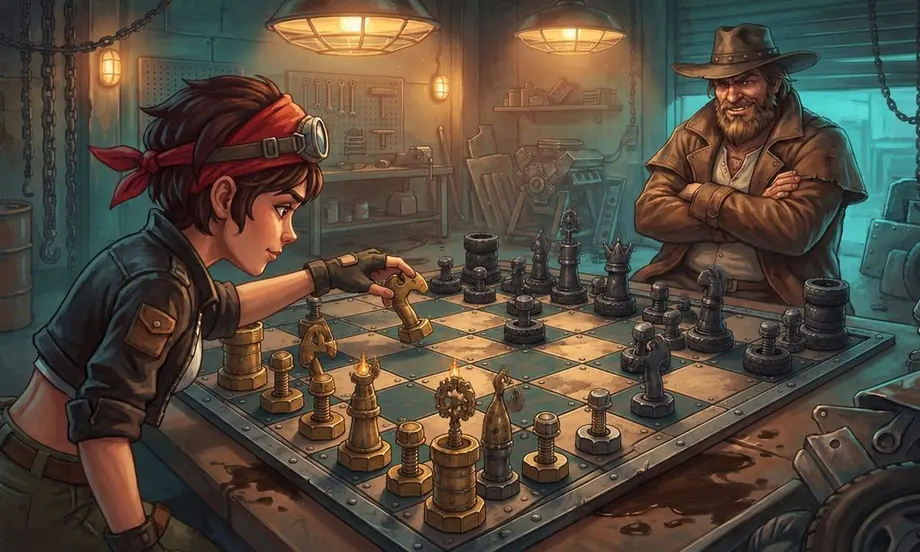
Chess
The game loads right here — no download needed.
In every Selminha game: P to pause · M to toggle sound · SPACE or tap to startAbout Chess
It is real chess with the official rules on the 8×8 board — only the pieces came out of Dália's scrapyard: the pawn is a bolt with a hex nut, the rook is a stack of tires or drum sections, the knight is a bent monkey wrench, the bishop is a blowtorch nozzle, the queen wears a flame crown and the king a gear-wheel crown. You play the brass pieces against the steel ones. Against the computer, there are four villains at four skill levels: the Tamer plays any old way, the Driver looks a little ahead, the Warden thinks four moves deep and the Executive thinks hard about every one. With a friend it is one link: whoever opens it joins as your opponent and the game stays on the site — each of you plays whenever you can, with an on-screen notice when the other player moved. Every chess rule is in: castling both ways, en passant, promotion with your choice of piece, check marked on the board, checkmate, stalemate and draws by repetition, 50 moves or insufficient material. No lives, no points: you win, lose or draw.
In Selminha's words
“Chess is the most played board game in the world, and I wanted ours: pieces Dália welded from whatever was lying around the shop, the villains across the table and a link to invite anyone you want — no sign-up, no app.”
How to play Chess, and tips for beating the computer
- Tap your piece, then the destination square. Possible squares light up green; a piece you can capture gets a red ring. Tap the same piece again to deselect it. On a computer, click or use the arrow keys/WASD plus J or Enter; on a gamepad, the D-pad plus A or X.
- Pick your character (Dália, Bruto Vale or Kiko Faísca). Playing against the computer? Then pick your opponent — 1 Tamer (very easy), 2 Driver (easy), 3 Warden (medium), 4 Executive (hard). You play the brass pieces and move first.
- Playing a friend? Tap PLAY A FRIEND, type your name, then copy and send the link. Whoever opens it picks one of the two remaining characters, types a name and joins with the steel pieces. The game is saved: close it and come back any time through the same link.
- During a game with a friend, you get an alert when the other player joins or moves (with the move notation); you can offer a draw, resign and, if your opponent goes more than two days without moving, tap END GAME: PLAYER AWAY. Rooms with no moves for 7 days expire. A full room can be watched — the game shows how many spectators there are.
- When a pawn reaches the last rank, the promotion choice pops up: queen, rook, bishop or knight. A king in check gets a red square, and only moves that get the king out of check are allowed.
- End of the game: checkmate wins. Draws: stalemate (the side to move is not in check and has no legal move), the same position three times, 50 moves with no capture or pawn move, or insufficient material to checkmate. P or Esc pauses; M toggles sound.
Animated walkthrough
Learn to play Chess in 11 steps
An animated scene for each rule. It's the same walkthrough that opens from the “?” button in the game.
The pieces and how they move
- Pawn (bolt)
- Moves one square forward (two on its first move) and captures diagonally. On the last rank it becomes a queen, rook, bishop or knight — your pick.
- Rook (tires or drums)
- Moves in a straight line, across or up and down, as far as you like.
- Knight (monkey wrench)
- Moves in an L — two squares one way and one the other — and is the only piece that jumps over others.
- Bishop (blowtorch)
- Moves diagonally, as far as you like, always on the same color of square.
- Queen (flame crown)
- Moves like a rook and a bishop combined: straight or diagonal, as far as you like.
- King (gear crown)
- Moves one square in any direction and can never be left in check. Once a game, it castles with a rook.
Special rules
- Castling
- King and rook that have never moved, nothing between them, the king not in check and not passing through an attacked square: the king moves two squares and the rook hops to its side.
- En passant
- A pawn that just advanced two squares can be captured on the very next move by an enemy pawn beside it, as if it had moved only one.
- Check and checkmate
- An attacked king is in check (its square turns red); only moves that get the king out of check are allowed. No way out means checkmate — game over.
- Draws
- Stalemate (no move and no check), the same position three times, 50 moves with no capture or pawn move, insufficient material, or a draw by agreement.
Controls on phone and computer
- Computer
- Tap or click the piece and the square · arrows or WASD move the cursor, J or Enter selects · P or Esc pauses · M sound · F full screen · gamepad supported: D-pad moves the cursor, A or X selects, Start pauses, Back toggles sound.
- Touch
- Portrait and full screen on phones. Tap the piece and the square; resign and draw buttons below the board; the promotion choice shows over the board. Invite with COPY: paste the link wherever you like (a text, a group chat…).
Against the computer and by invite
- Four villains
- Tamer (very easy), Driver (easy) and Warden (medium): the computer looks 1, 2 and 4 moves ahead; the Tamer still plays any old move half the time, and the Driver slips now and then (a decent move, not the best one). Executive (hard): thinks for 2.5 seconds on every move, as deep as that allows, and never slips — with pawn structure, the bishop pair, open files and king shelter in mind.
- Invite
- One link per game. Whoever opens it joins as your opponent; the room lives on the site and each of you plays when you can. Up to 10 open games per device — past that, the game lists yours and you close one with a tap.
- Alerts
- Joined, moved (with the move notation), offered a draw, resigned — on screen, with sound and vibration; with the tab in the background the title blinks and, if you allow it, a notification goes out.
- Watching
- Room full? You can watch. Everyone sees how many spectators there are.
- Rematch
- Game over? You both stay at the table, with the result on screen and the question "Another game with NAME?" Both say yes and a new one starts in the same room, as many times as you like — anyone watching keeps watching.
- No points
- You win, lose or draw. The scoreboard shows the pieces each side captured and the material advantage.
This game has no leaderboard: between friends you invited, it wouldn't mean much.
Tell us what happened, or what you'd change. Your message goes straight to Selminha, and you'll get a reply by email.
More brain games
Your next discovery could be right here.
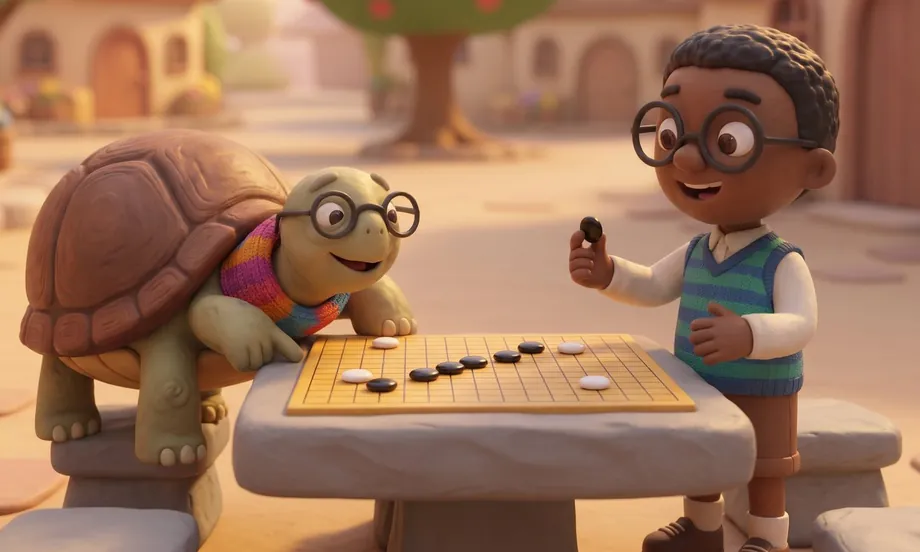
Gomoku: Five in a Row
Backyard Town's gomoku, made entirely of clay: the first to get five stones in a row wins. Take on Scribble (easy), Nino (medium) or Granny Quelonia (hard). Want to play a friend? Share one device or send a link and play on your own devices.
Play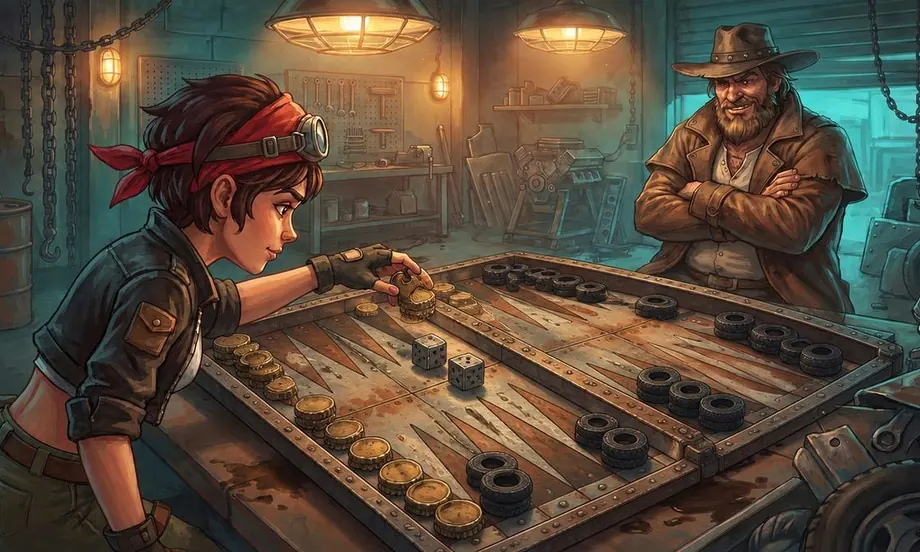
Backgammon
Scrapyard backgammon in Dália's workshop: brass drum lids against tires on a steel-plate board, with dice welded from junk. Take on the four villains, from the Tamer (very easy) to the Executive (hard), or send someone a link and play whenever you can, each on your own device. Standard backgammon: 15 checkers a side, the bar, home board, bearing off, doubles and the must-use-both-dice rule. First to bear off all 15 wins.
Play